
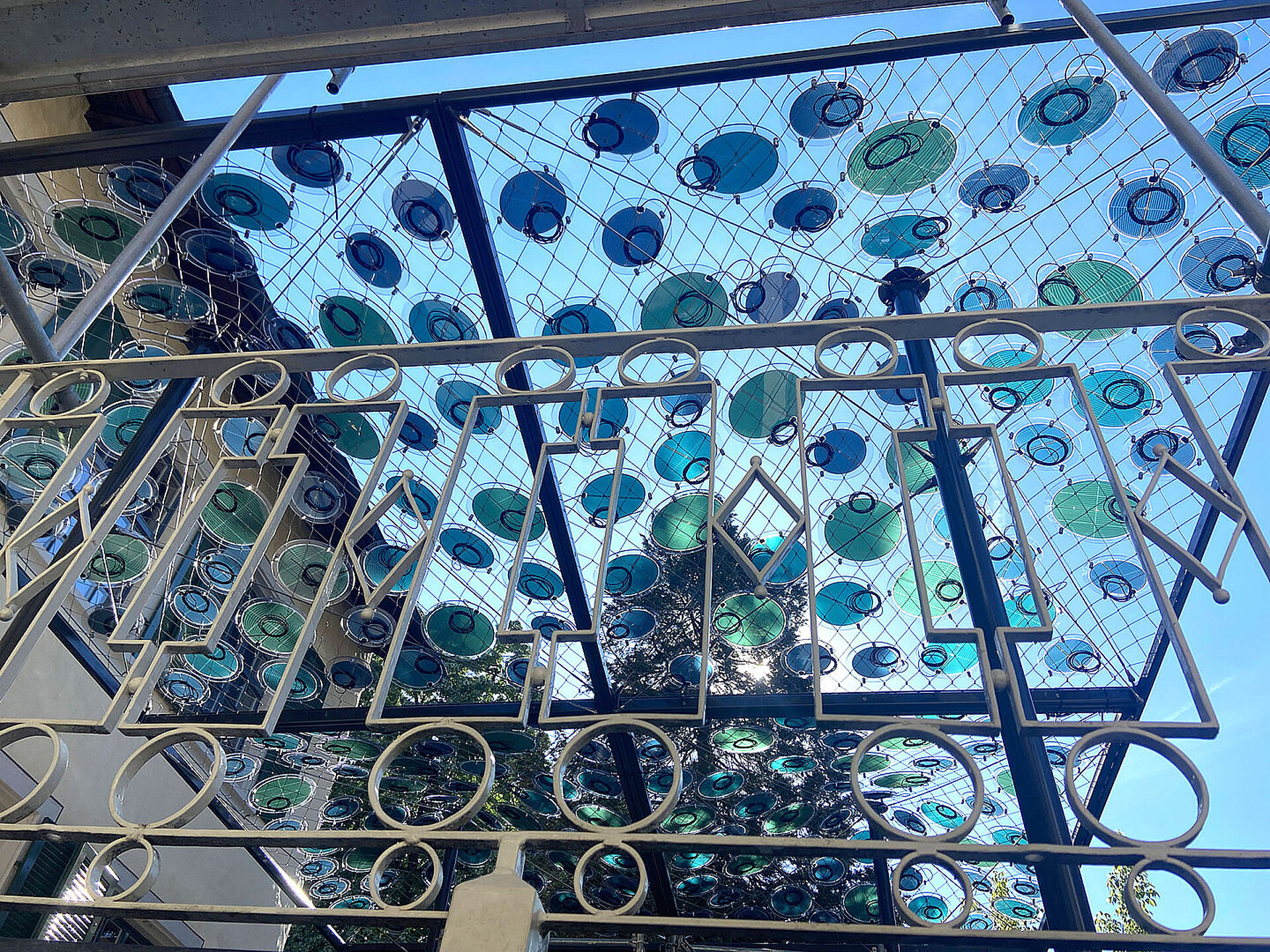
Historic Architecture Meets Integrated Energy Generation
A delicate pergola featuring semi-transparent OPV modules in green, turquoise and blue combines historic architecture with modern energy generation. The modules are integrated into a stainless steel cable net and feed the electricity they generate directly into the building's electrical system.
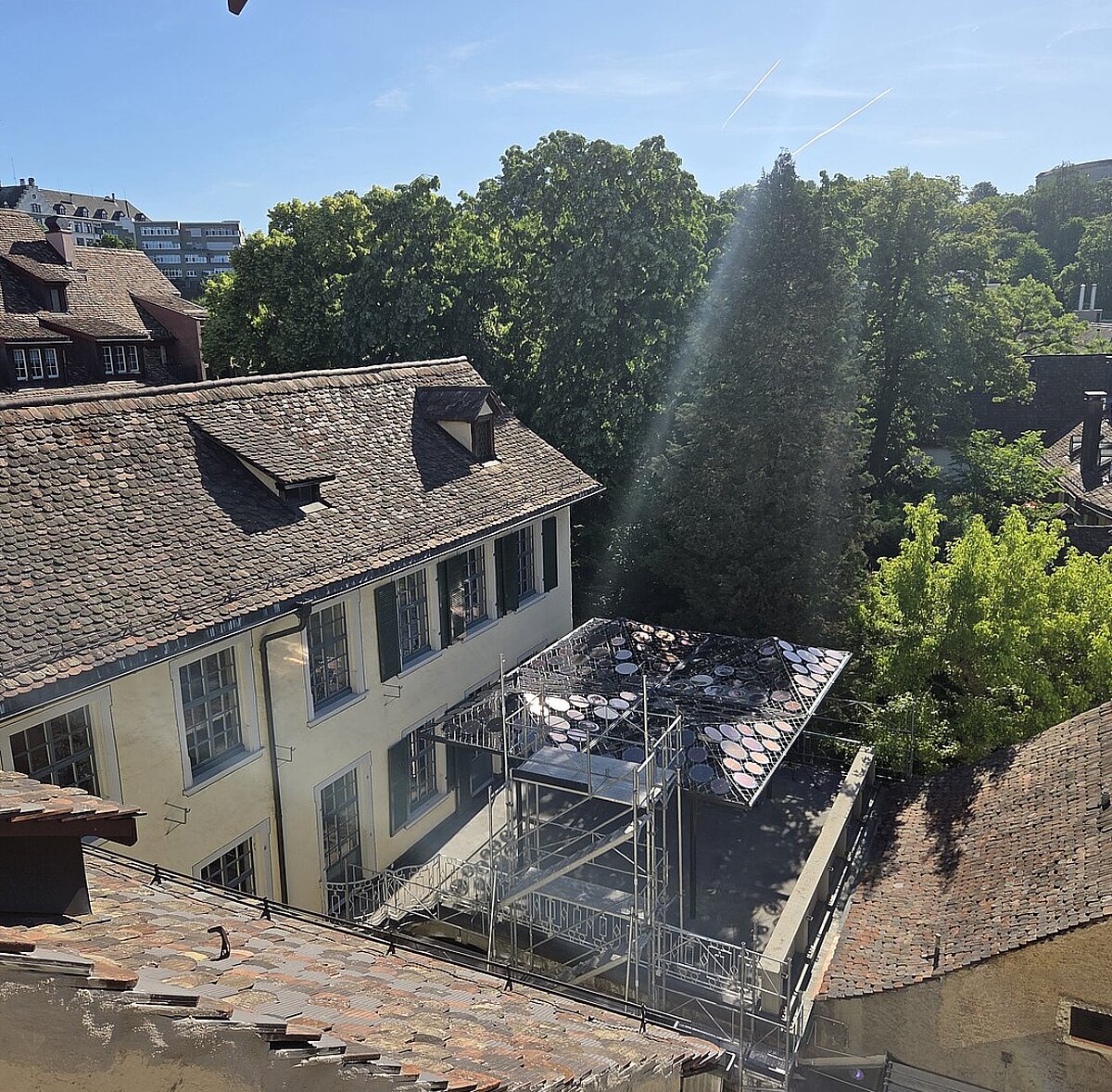
Haus zum Freudenfels in Schaffhausen is part of a group of buildings dating back to the 16th century and is undergoing restoration in accordance with heritage conservation requirements. It houses the historic town house, the civil registry office, as well as studios, medical practices and office spaces. The aim of the project was to combine historic building fabric with contemporary architecture and sustainable building technology.
To achieve this, a delicate, energy-generating pergola was installed in the courtyard. Lightweight, semi-transparent OPV modules from ASCA® were integrated directly into the structure, combining architectural design with renewable energy generation.
Lightweight Structure, Integrated Energy Generation
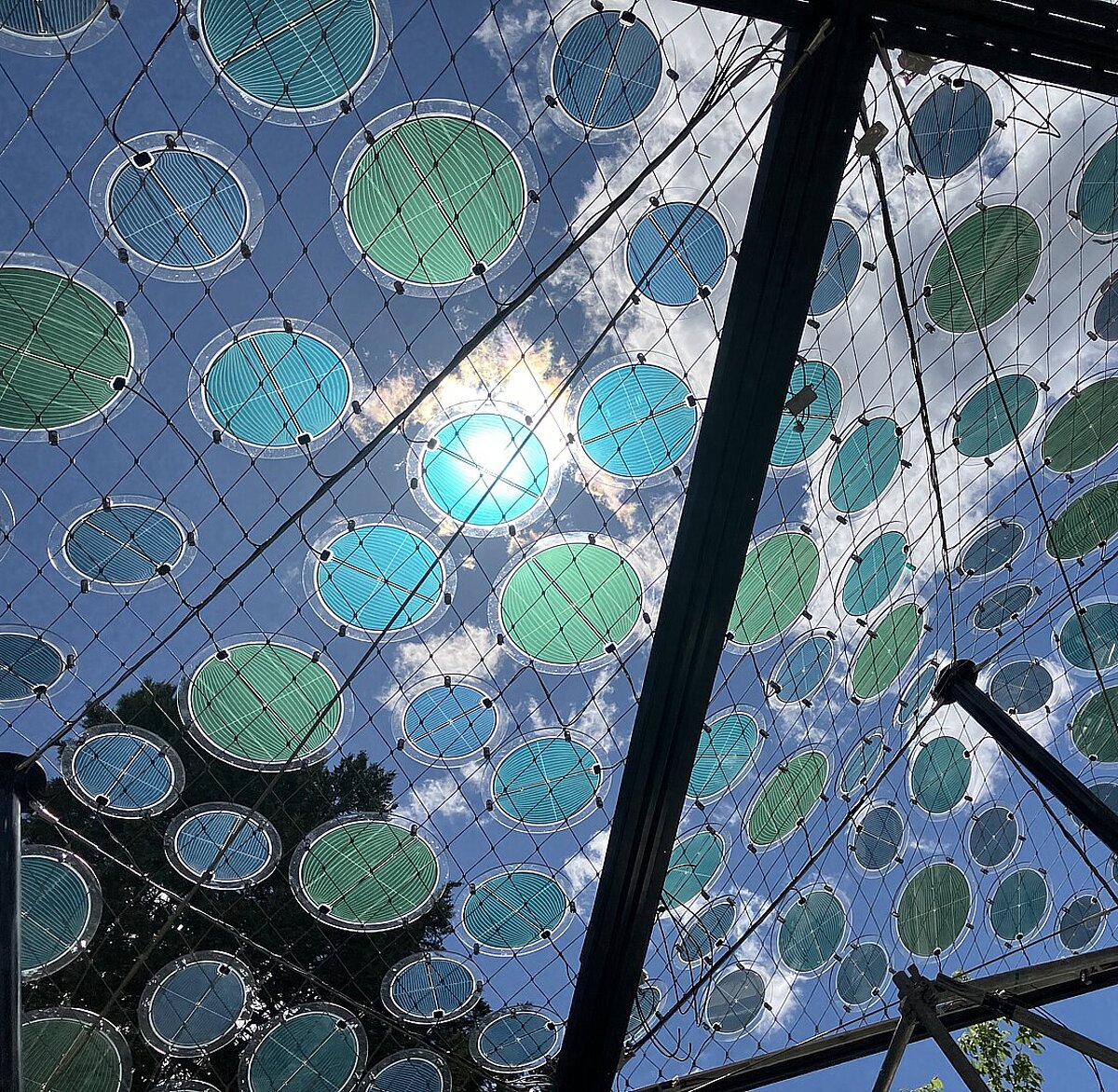
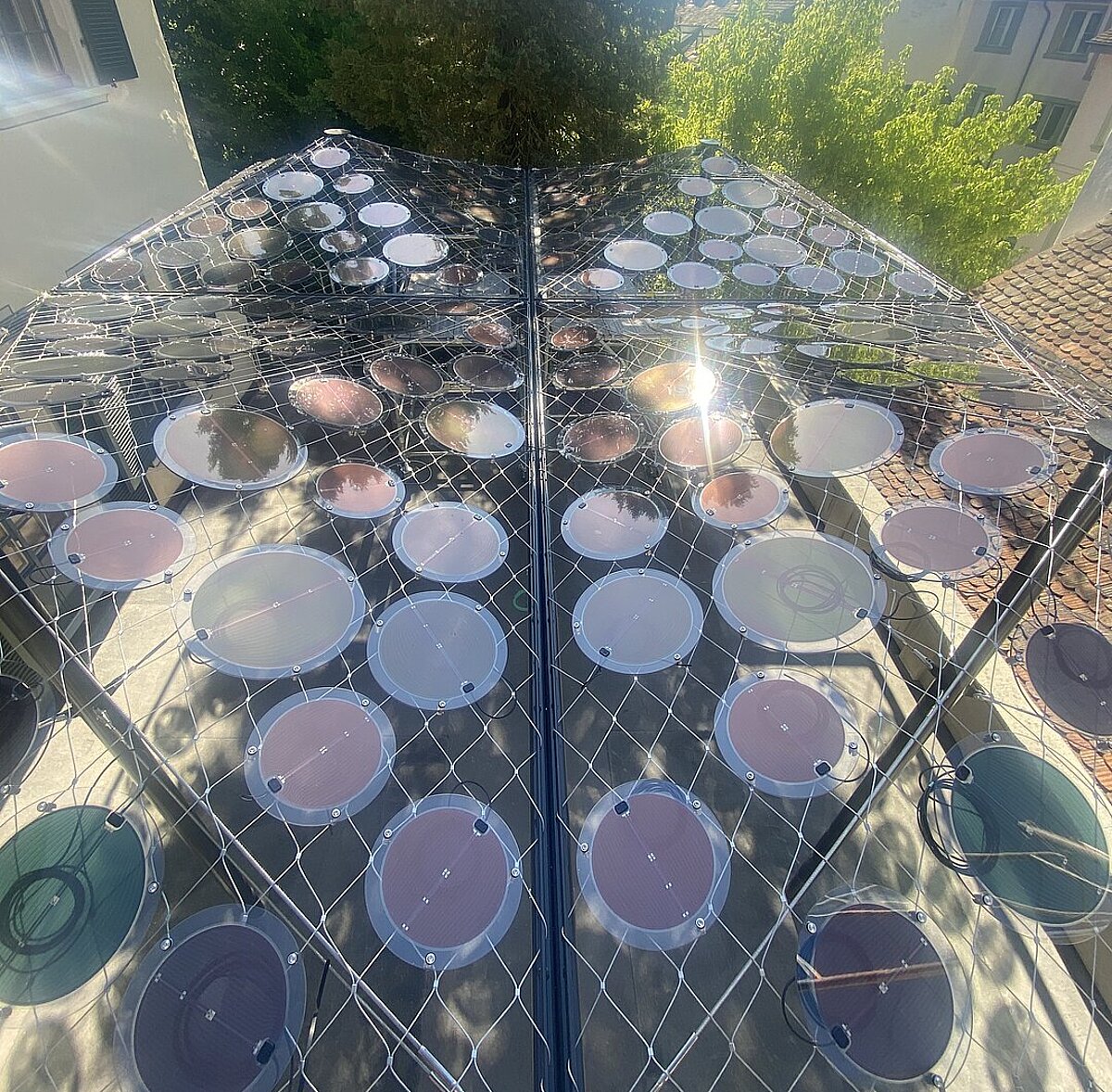
Custom-designed OPV modules from ASCA® are integrated into a delicate stainless steel cable net. The modules come in three different sizes and are available in green, turquoise and blue.
Thanks to their low weight and semi-transparency, they blend seamlessly into the structure, creating a dynamic interplay of light and shadow. At the same time, the electricity generated is fed directly into the building's electrical system.
The pergola combines architectural design and energy generation within a sensitive historic setting.
Project Details
- Location: Schaffhausen, Switzerland
- Technology: Semi-transparent organic photovoltaics
- OPV Colors: Green, turquoise, blue
- Module Variants: Three different module sizes
- Integration: Stainless steel cable net
- Encapsulation: Primary PET encapsulation
- Energy Utilization: Electricity fed into the building's electrical system